Femina Hip, Government and Ireland Call for Greater Action to End Child Marriage and Invest in Girlse
By Muheza, Tanga, 22 Oct 2026
Femina Hip, the Government of Tanzania and the Government of Ireland have called for stronger collective action to end child marriage and ensure that every girl has the opportunity to learn, lead and shape her future.
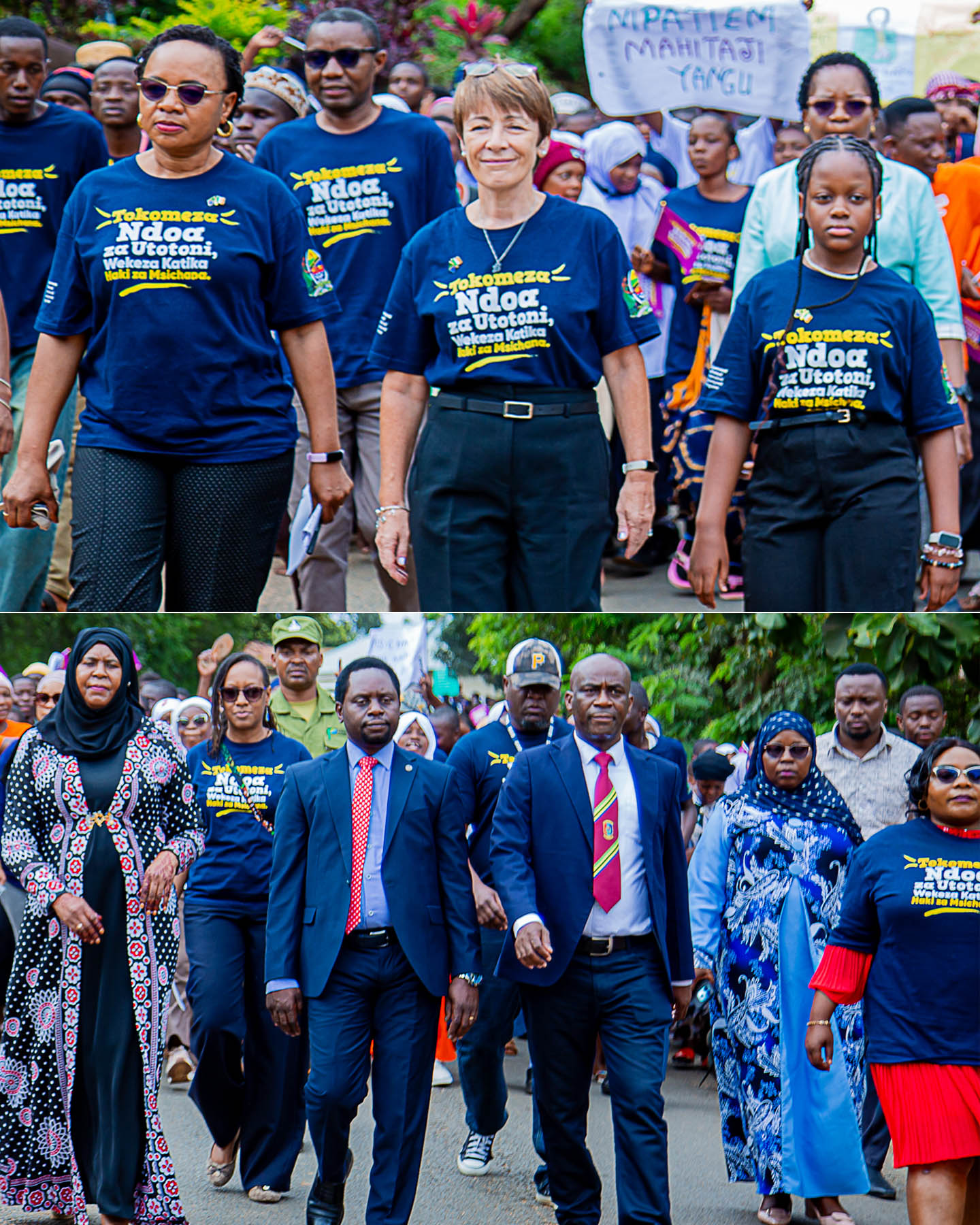
The call was made during the International Day of the Girl Child commemoration held in Muheza District, Tanga Region, on 20 October 2026, under the theme “Tokomeza ndoa za utotoni, wekeza katika haki za wasichana” (End Child Marriage, Invest in Girls’ Rights).
The event brought together government leaders, development partners, young people and community stakeholders to reflect on the importance of protecting girls’ rights, keeping girls in school and creating opportunities for them to reach their full potential.
Participants included Hon. Dr. Festo Dugange, Deputy Minister in the President’s Office – Regional Administration and Local Government (PMO-RALG), responsible for Education; H.E. Nicola Brennan, Ireland’s Ambassador to Tanzania; Ambassador Dr. Batilda Salha Burian, Regional Commissioner of Tanga; and Ruth Mlay, Executive Director of Femina Hip.
Investing in Young People Creates Lasting Change
Speaking at the commemoration, Femina Hip Executive Director Ruth Mlay highlighted the impact of the organisation’s work in Muheza through the Ujana Salama programme, which began in the district in 2022.
Through peer education, the programme has reached more than 37,000 adolescents and young people with information on sexual and reproductive health and rights, gender-based violence prevention, leadership and economic empowerment.
In collaboration with Muheza District Council, close to 100 young people have received support to establish groups and businesses. The support has included loans, starter kits and equipment, training and market access. More than 100 young people have also contested local elections, won leadership positions or been selected to serve on local government leadership committees.
“When young people have information, they gain confidence. When they gain confidence, they find their voice. When they find their voice, they become agents of change,” Mlay said.
She emphasised that empowering girls and engaging boys are both important in building communities where gender equality is respected and children’s rights are protected.
“The future of girls and the future of boys are not separate. They are deeply connected” ,she added.
Young People Taking Action to Protect Girls’ Rights
The commemoration showcased inspiring examples of young people using their knowledge and skills to create positive change in their communities.
Athumani Jumanne, a youth champion from Tanganyika Ward, used the knowledge he gained through Ujana Salama to advocate for a Form One student from Mpapayu Ward who had been forced to leave school by her father. Working with village and ward leaders, Athumani helped address the situation, enabling the girl to return to school.
His experience demonstrates how informed and empowered young people can help challenge harmful practices and protect the rights of others.
Economic empowerment was also highlighted through the story of Mayasa Iddy, 27, from Kigombe Ward. In 2024, she received three sewing machines through support from the Muheza Community Development Office in collaboration with Femina Hip. By 2026, she had expanded her business to six sewing machines and established a workshop. She had also trained 22 young people free of charge, with two trainees going on to start their own businesses.
Another example was Mwanaisha Kasele, 21, from Tanganyika Ward, who resisted family pressure to marry. The knowledge and confidence she gained through Ujana Salama strengthened her ability to stand up for her future. She now advocates for girls’ rights and education, encouraging other girls to remain in school and make informed decisions about their lives.
These stories show how access to information, skills and supportive community structures can help young people overcome challenges and build better futures.
Government Reaffirms Commitment to Girls’ Education
Hon. Dr. Festo Dugange reaffirmed the Government’s commitment to expanding educational opportunities, strengthening youth participation and supporting young people’s economic empowerment.
He highlighted government initiatives, including interest-free loans equivalent to 10 per cent of local government councils’ own-source revenues for youth, women and persons with disabilities, alongside vocational skills development, entrepreneurship and financial literacy.
He also emphasised the importance of ensuring that girls who become mothers have opportunities to return to formal education and continue pursuing their aspirations.
“When we invest in girls, we invest in stronger families, more prosperous communities, and a more resilient nation,” Dr. Dugange said.
He also recognised the contribution of Fema Clubs, which provide safe spaces for girls and boys to develop leadership, confidence and critical-thinking skills while discussing issues that affect their lives.
Ireland Highlights the Importance of Gender Equality
Ireland’s Ambassador to Tanzania, H.E. Nicola Brennan, reaffirmed Ireland’s commitment to gender equality and the protection of girls’ rights, recognising the importance of partnerships with organisations working directly with communities.
Ireland supports initiatives implemented by organisations including Femina Hip, UZIKWASA and AMREF to advance gender equality and improve opportunities for girls and women.
“Gender equality is both a fundamental human right, and also a necessary condition for sustainable global development,” Brennan said.
A Girl’s Dream of Becoming a Diplomat
One of the highlights of the commemoration was the participation of 12-year-old Georgina Magesa through the Girls Takeover initiative, which gave her the opportunity to temporarily experience the role of Ireland’s Ambassador to Tanzania.
Georgina shared her dream of becoming a diplomat in the future.
“I am 12 years old, and I have a dream that one day when I grow up, I will be a real balozi of Tanzania to either Ireland or another country,” she said.
She called for greater investment in girls’ education, healthcare and access to information, safe environments, skills development and opportunities to participate in decisions affecting their lives.
“We are not merely the leaders of tomorrow. We are leaders today,” Georgina said, urging parents to believe in their daughters and leaders to strengthen efforts to protect girls from child marriage and other harmful practices.
Her participation underscored the importance of listening to girls, recognising their leadership and creating opportunities for them to influence decisions that shape their futures.
Protecting Girls Is Everyone’s Responsibility
The commemoration reinforced the message that ending child marriage requires coordinated action from government institutions, families, communities, development partners and young people.
Keeping girls in school, providing access to accurate information, strengthening protection systems and expanding opportunities for leadership and economic empowerment are essential steps towards ensuring that every girl can grow up safely and make informed decisions about her future.
Through its programmes, including Fema Clubs, Fema magazine and Story Yangu Podcast, Femina Hip continues to use communication and youth engagement to equip adolescents and young people with information, skills and opportunities to participate in their communities and become agents of positive change.
SEnding child marriage starts with protecting girls’ rights, listening to their voices and investing in their future.
–END